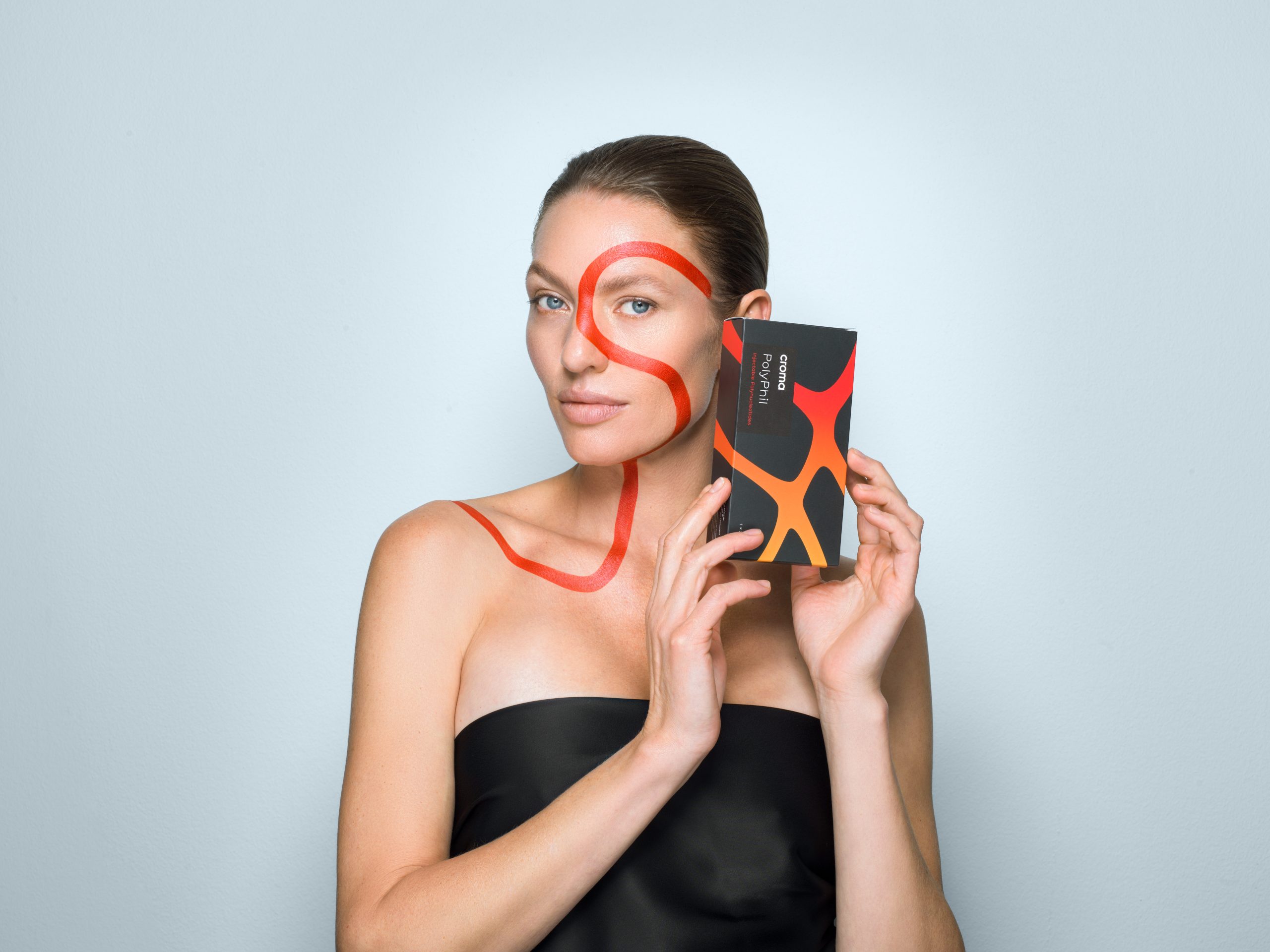

Polynucleotides

The ‘one-size-fits-all’ approach does not apply when it comes to aesthetic treatments. Now is the time to give your skin the personalised treatment it deserves.
Polynucleotides are chains of nucleotides that form the basis of DNA. In Aesthetics, these chains are used to trigger the body’s natural healing responses for skin regeneration.
Polynucleotide-based aesthetic treatments promote skin rejuvenation through mechanisms which include cellular repair, stimulation of collagen production, and enhancement of skin elasticity and hydration. Polynucleotides not only address the volume loss but also reduce the appearance of fine lines and wrinkles. On top of this, polynucleotides offer antioxidant properties that help protect the skin from environmental damage and promote skin health.
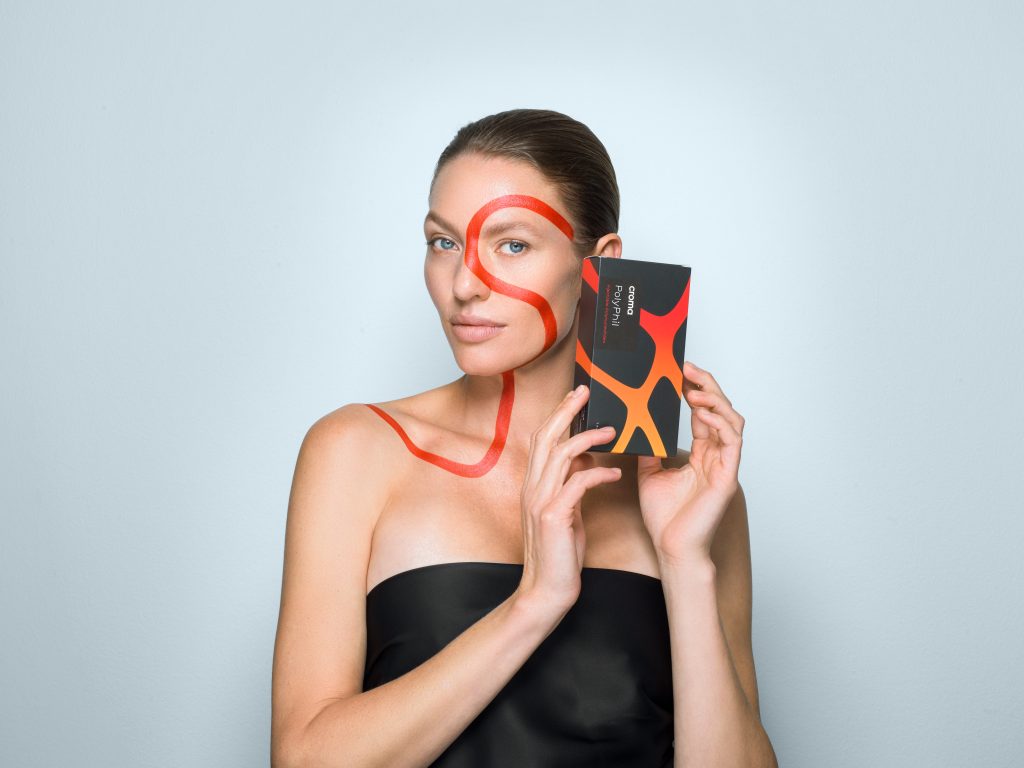
Benefits of Polynucleotides
Polynucleotides have multiple benefits for the repair and regeneration of skin including:
– Boosting collagen and elastin production
– Improving skin elasticity and firmness
– Promoting tissue regeneration with better outcomes than hyaluronic acid alone
– Improving skin texture and hydration
– Minimising wrinkles and fine lines
– Antioxidant activity and scavenging of free radicals
– Regulating the activity of melanocyte cells which produce pigmentation
About PolyPhil
The PolyPhil TM products are polynucleotide-based treatments that invigorate your look. PolyPhil TM stimulate the production of collagen and elastin improving the texture and elasticity of the skin leading to a more radiant, rejuvenated skin. Polynucleotides also enhance the skin’s natural ability to retain moisture, resulting in a more hydrated and youthful appearance.
PolyPhil TM products are derived from freshwater trout, bread in highly controlled European fish farms allowing for consistently safe and effective treatments.
Uses
Common conditions polynucleotides are used for:
– Skin rejuvenation and hydration
– Scars and striae: from acne, striae, cuts, burns, sun damage or ageing
– Facial erythema caused by rosacea, atopic dermatitis, acne, seborrheic dermatitis,
repeated laser, microneedling and steroid overuse
– Pigmentation and inhibition of melanin overproduction: melasma, freckles, senile lentigines
– Hair regeneration
– Skin priming for other skin treatments or in combination with other skin treatments
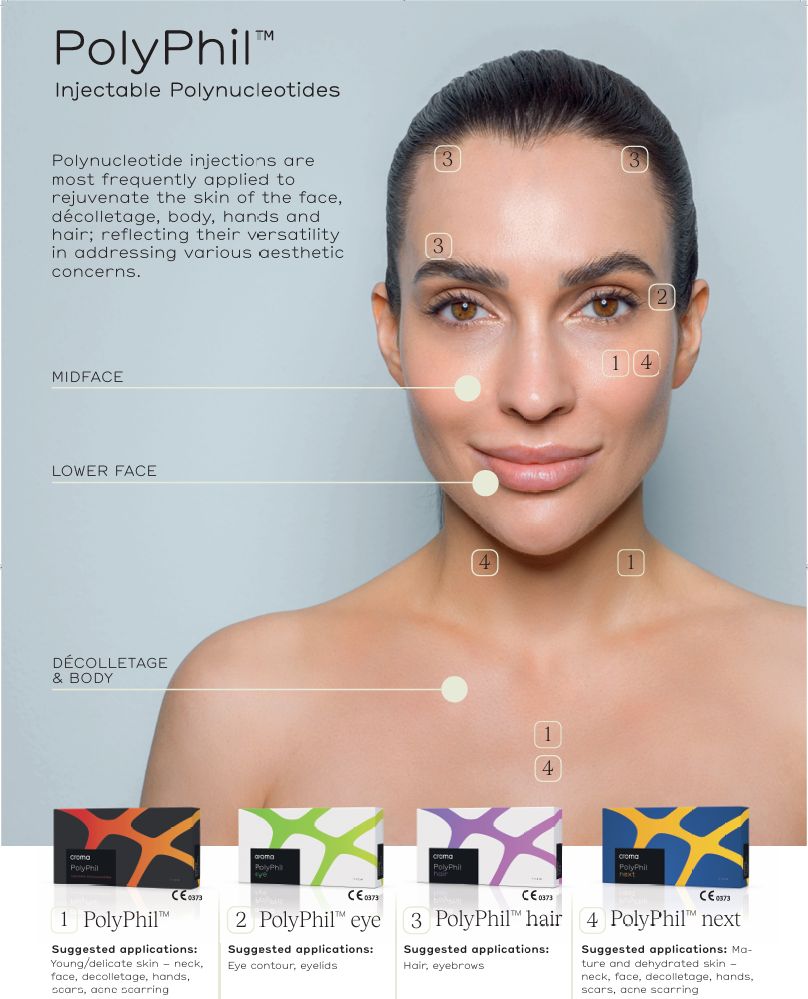
Polynucleotides offer a natural, effective, and safe option for skin rejuvenation. The aim of using polynucleotides in aesthetic treatments is to achieve natural and harmonious results that enhance facial features while maintaining overall skin health. Thus, understanding the client’s unique characteristics is essential for developing effective, tailored aesthetic treatments.
Please be Aware
While polynucleotides treatments are very safe, there are several contraindications that patients should be aware of:
– Allergies and sensitivities: individuals with known allergies to fish or shellfish-derived products are at a higher risk of allergic reactions when using polynucleotides products. Allergic reactions may manifest as redness, itching, rash or swelling and require immediate discontinuation of use. Conducting a skin patch test before applying these products on larger skin areas is essential to identify potential sensitivities.
– Skin conditions: active skin infections, open wounds, eczema, psoriasis or other inflammatory skin conditions compromise the skin barrier that may be further irritated by polynucleotides products.
– Autoimmune disorders: polynucleotides can potentially modify immune responses in the skin.
– Recent skin treatments: skin treatments like chemical peels, laser therapy, or cosmetic surgery can disrupt the skin barrier and increase sensitivity.
– Pregnancy and breastfeeding: safety data on polynucleotides use during pregnancy and breastfeeding is limited.
– Underlying health conditions: individuals with a history of skin cancer or undergoing treatment for skin cancer should avoid polynucleotide products as these may promote cell growth and interfere with cancer therapies.
This wide range of uses highlights the polynucleotides’ role as versatile and effective components in modern skincare regimens, feeling in the gap for those individuals looking for non-invasive yet impactful solutions for skin enhancement and rejuvenation.
For tailored advice and treatment planning, we recommend booking a personal free consultation with our Medical Aesthetic Practitioner Alexandra Mitrea at Aesthetic Solace to guide you through this process and address your skin concerns. Advice will be given accordingly, and the most appropriate product will be selected for you and your treatment plan.
Frequently Asked Questions
Injectable polynucleotides are an increasingly appealing option for patients that wish to improve their skin quality, whether this is for maintaining skin health, managing aging concerns, or treating mild to moderate skin pathology. Polynucleotides offer a regenerative, non-surgical approach to skin rejuvenation, expanding the therapeutic options available in aesthetic medicine.
The ability to replenish collagen naturally decreases by about 1.0% – 1.5% per year of age. This decrease in collagen is one of the characteristic hallmarks associated with the appearance of fine lines and deeper wrinkles.
Elastin production decreases after maturity. With age, elastic fibres also degrade and lose compliance. This leads to the reduction of the structural integrity of the skin. Sun-exposed skin shows more dramatic changes in the elastic fibre network. Also, disrupted elastic fibre networks are seen in wound healing, scars, and stretch marks.
Polynucleotides are injectable treatments meaning that a fine needle is used to administer the product into the dermal layers of the skin. Usually, a series of small points are made depending on the treated area and indication.
You can expect to see the full results following polynucleotide treatments in about 3-5 weeks, however this can differ depending on the individual and the treated area. For best results, patients are recommended to have 3 or 4 polynucleotide treatment sessions spaced 3-4 weeks apart which will take around 9-12 weeks to complete and a further 3 months for full results to be visible. and the area treated can potentially influence how long the results will last.
Polynucleotides stimulate the fibroblasts responsible for the birth and regrowth of new hair follicles, contributing to the growth of stronger and healthier hair shafts. Polynucleotides can be combined with other interventions such as hyaluronic acid, topical therapy etc to enhance the treatment benefits.
Traditional skin boosters offer short-term and fast-acting hydration and glow, whereas polynucleotides offer a long-term plan for skin rejuvenation. Treatments with polynucleotides may take longer to show results; however, their results last much longer than skin boosters. Skin boosters’ benefits may last for about 6 months, whereas polynucleotides’ benefits can be seen for up to 12 months.
References:
Aesthetics Courses from Harley Academy | UK’s Leading Aesthetic Medicine Training
Provider. www.harleyacademy.com. Retrieved June 2026, from
https://www.harleyacademy.com/
Cavallini, M., Bartoletti, E., Maioli, L., Massirone, A., Pia Palmieri, I., Papagni, M., Priori, M.,
& Trocchi, G. (2020). Consensus report on the use of PN‐HPT TM (polynucleotides
highly purified technology) in aesthetic medicine. Journal of Cosmetic Dermatology,
20(3), 922–928. https://doi.org/10.1111/jocd.13679
Lampridou, S., Bassett, S., Cavallini, M., & Christopoulos, G. (2024). The Effectiveness of
Polynucleotides in Esthetic Medicine: A Systematic Review. Journal of Cosmetic
Dermatology. https://doi.org/10.1111/jocd.16721
Titcomb, L. (2025). A literature review on polynucleotide efficacy on skin rejuvenation, and
review of the regulatory status and guidelines around polynucleotides. Journal of Aesthetic Nursing, 14(2), 98–126. https://doi.org/10.12968/joan.2025.0009